Artificial intelligence is moving from isolated experiments into everyday supply chain planning and execution. In 2026, the most useful applications are not generic chatbots. They are focused systems that improve forecasts, recommend inventory actions, detect supplier risk, optimize routes and help planners evaluate trade-offs faster.
This guide explains how AI and machine learning work in supply chain management, where they create value, what data they require and how to implement them responsibly. It also separates proven analytical AI from newer generative and agentic AI capabilities.
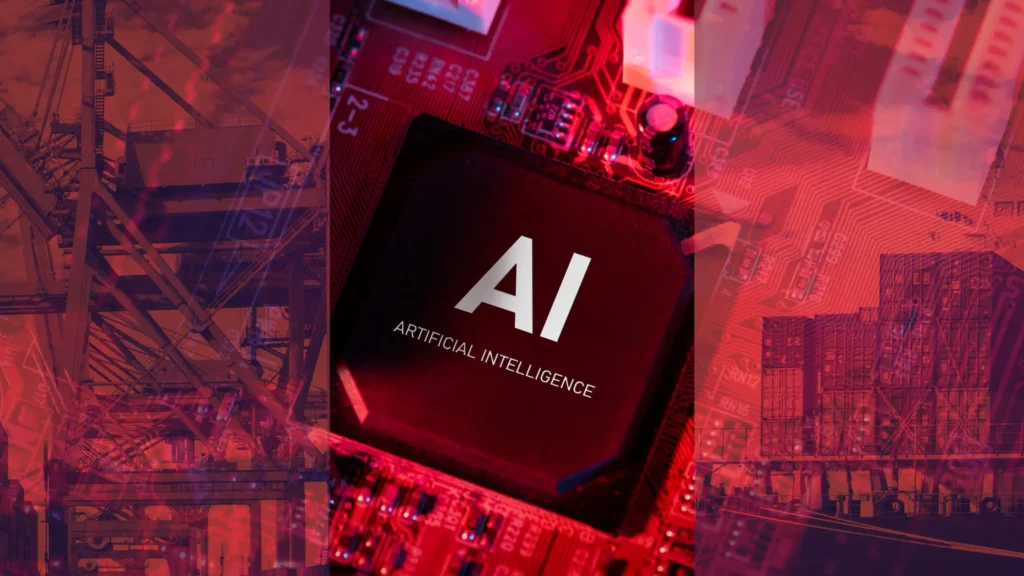
What Is AI in Supply Chain Management?
AI in supply chain management refers to systems that use data to predict outcomes, recommend decisions or automate defined tasks across sourcing, planning, manufacturing, warehousing and transportation. Machine learning is a branch of AI that learns patterns from historical and real-time data instead of relying only on fixed rules.
The distinction matters. A forecasting model predicts demand; an optimization engine recommends an order quantity; generative AI summarizes an exception; and an AI agent may coordinate several approved steps across systems. These capabilities can work together, but they require different data, controls and levels of human oversight.
AI vs. Machine Learning vs. Generative AI
| Capability | Primary role | Supply chain example |
|---|---|---|
| Machine learning | Predict patterns and outcomes | SKU-location demand forecast |
| Optimization | Select the best action within constraints | Replenishment or vehicle-routing plan |
| Generative AI | Create, summarize and explain information | Explain forecast exceptions or draft a supplier brief |
| Agentic AI | Coordinate multi-step actions using tools and rules | Identify a shortage, evaluate alternatives and prepare a transfer recommendation |
Seven High-Value AI Use Cases in Supply Chains
1. Demand Forecasting
Machine-learning models can combine sales history with promotions, prices, holidays, weather, channel activity and local demand signals. The goal is not to eliminate forecast error; it is to produce a more responsive forecast at the level where decisions are made. Accuracy should be monitored by product, location and forecast horizon using metrics such as WAPE, bias and forecast value added.
Related guide: Planning and Demand Forecasting in Supply Chain Analytics.
2. Inventory and Replenishment Optimization
AI can estimate demand distributions, detect changing lead times and recommend reorder points, safety stock or transfers between locations. These recommendations still need operating constraints such as minimum order quantities, case packs, shelf life, capacity and service targets. A sophisticated model with incomplete constraints can create an impractical plan.
Related guide: Inventory Optimization in Supply Chain.
3. Logistics and Route Optimization
Transportation systems use predictive models to estimate travel times and optimization algorithms to build routes around vehicle capacity, delivery windows, driver rules, traffic and cost. Models can be rerun when conditions change, but dispatchers should retain control when safety, customer commitments or unusual local conditions are involved.
4. Supplier Risk and Procurement
AI can combine supplier lead-time variability, quality performance, fill rate, financial indicators and external disruption signals into risk alerts. The output should support investigation rather than automatically penalize a supplier. Procurement teams need transparent criteria, traceable source data and a process for reviewing false positives.
5. Predictive Maintenance
Machine-learning models can analyze vibration, temperature, pressure and maintenance history to estimate failure risk. The business value comes from scheduling work before disruption while avoiding unnecessary preventive maintenance. Useful measures include unplanned downtime, mean time between failures, maintenance cost and production loss avoided.
6. Warehouse Operations and Computer Vision
Warehouses use AI for slotting, labor planning, robotic movement, pick-path optimization, damage detection and cycle-count support. Computer vision can identify objects or exceptions, while optimization models balance throughput with congestion and service priorities. Performance should be measured through pick rate, order accuracy, dock-to-stock time and cost per order.
7. Generative and Agentic AI for Planners
Generative AI can translate natural-language questions into analysis, summarize exceptions and explain recommended actions. Agentic systems go further by coordinating approved workflows across planning, ERP, WMS and TMS tools. In practice, organizations should begin with low-risk, reversible tasks and require human approval for consequential decisions such as supplier changes, large purchase orders or customer allocations.
What Benefits Should Companies Measure?
- Planning: forecast accuracy, bias, planner touch time and exception resolution time.
- Inventory: service level, stockout rate, days of inventory, obsolescence and working capital.
- Logistics: on-time delivery, cost per shipment, route miles, capacity utilization and emissions intensity.
- Warehouse: throughput, pick accuracy, labor hours per order and equipment downtime.
- Procurement: supplier lead-time reliability, quality, savings realized and disruption response time.
AI performance and business performance are not the same. A model can be statistically accurate without improving service or cost. Every implementation should therefore connect a model metric to an operational KPI and a financial outcome.
Common Implementation Challenges
- Fragmented data: ERP, WMS, TMS and supplier records may use different definitions and identifiers.
- Poor master data: inaccurate lead times, unit conversions or product hierarchies undermine model outputs.
- Model drift: customer behavior and supply conditions change, so performance must be monitored after launch.
- Weak integration: insights that do not fit the planner’s workflow are unlikely to be adopted.
- Limited explainability: users need to understand major drivers, confidence and constraints before acting.
- Governance and security: access controls, audit trails, data protection and approval limits become more important as systems gain autonomy.
- Change management: teams need training, process ownership and clear escalation paths—not only new software.
A Practical AI Implementation Roadmap
Step 1: Start With a Decision
Define the recurring decision that needs improvement, who owns it and what currently goes wrong. “Use AI” is not a business case; “reduce manual forecast exceptions for high-volume SKUs” is.
Step 2: Establish a Baseline
Measure current accuracy, cost, service and cycle time before the pilot. Without a baseline, the team cannot distinguish genuine value from an impressive demonstration.
Step 3: Validate the Data
Check completeness, granularity, timeliness and consistent definitions. Document which data would have been available at the moment each historical decision was made to avoid data leakage during testing.
Step 4: Pilot With Human Review
Run the recommendation alongside the existing process, record overrides and study failure cases. Planner overrides can reveal missing constraints or business knowledge that the model does not yet capture.
Step 5: Scale With Monitoring and Controls
Track model quality, operational KPIs, adoption, overrides and unintended outcomes. Define who can approve actions, when the system must stop and how decisions can be audited or reversed.
The Future: From Prediction to Decision Support
The direction of travel is clear: supply chain AI is moving from standalone prediction toward connected decision support. Generative interfaces will make complex systems easier to query, while AI agents will coordinate more steps across planning and execution. However, reliable data, explicit constraints and human accountability will remain essential.
The most successful organizations will not be those that automate every decision first. They will be those that choose valuable use cases, measure outcomes honestly and give planners tools they can understand and trust.
Frequently Asked Questions
How is AI used in supply chain management?
AI is used for demand forecasting, inventory planning, supplier-risk monitoring, predictive maintenance, warehouse optimization, transportation planning and decision-support workflows.
Will AI replace supply chain planners?
AI is more likely to change the planner’s work than eliminate it. Systems can automate data preparation and routine recommendations, while people remain responsible for objectives, constraints, exceptions, negotiations and accountable decisions.
What data is needed for supply chain machine learning?
Requirements depend on the use case, but common inputs include demand history, inventory positions, orders, lead times, product and location master data, promotions, supplier performance and operational constraints.
Conclusion
AI and machine learning can improve supply chain decisions when they are applied to a defined operational problem and supported by reliable data. Demand forecasting, inventory optimization, logistics, supplier risk and warehouse operations are proven starting points. Generative and agentic AI add new ways to explain insights and coordinate work, but they also increase the need for governance and human oversight.
For supply chain teams, the practical question is no longer whether AI matters. It is which decision to improve first, how success will be measured and what controls are required to scale responsibly.
Authoritative references: IBM: What Is AI in Supply Chain?; IBM: AI Agents in Supply Chain; and McKinsey Supply Chain Risk Survey.




2 Comments