
Inventory pooling and cross-docking are often discussed together because both can reduce unnecessary storage. They solve different problems, however. Inventory pooling changes where and how much stock is held; cross-docking changes how goods flow through a facility.
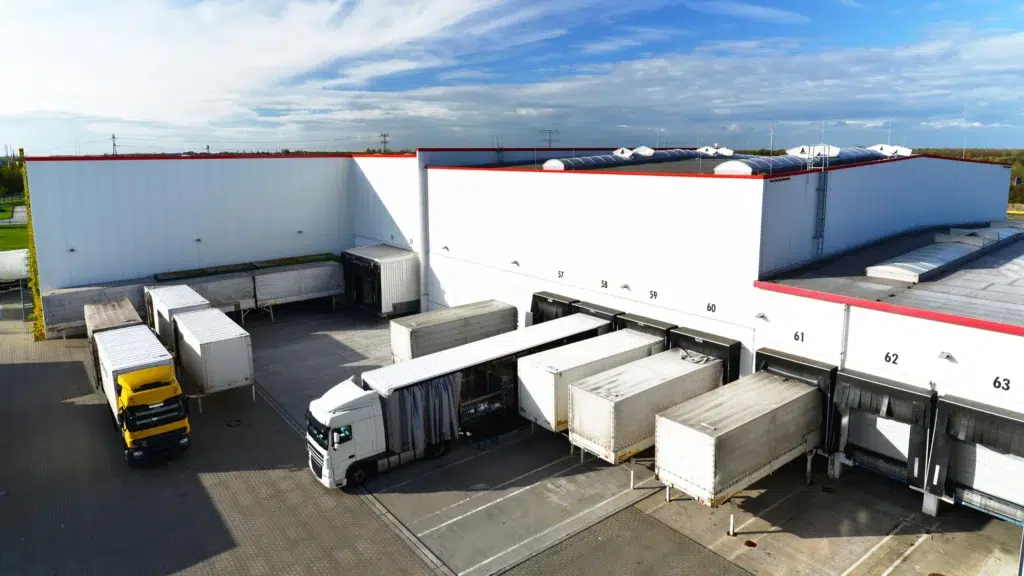
Neither method automatically reduces total supply chain cost. Pooling may lower safety stock while increasing outbound distance or response time. Cross-docking may reduce storage time while increasing the need for synchronized transport, accurate shipment information and disciplined dock scheduling. The correct decision requires a network-level comparison.
Inventory Pooling vs Cross-Docking
| Dimension | Inventory pooling | Cross-docking |
|---|---|---|
| Primary decision | Where inventory should be positioned | How inbound goods should move to outbound flow |
| Main objective | Share demand risk and reduce duplicated buffers | Limit storage and handling between receipt and dispatch |
| Inventory state | Stock is held, but aggregated | Goods pass through with minimal storage |
| Key dependency | Demand relationship, lead time and network economics | Timing, identification, allocation and transport coordination |
| Major trade-off | Inventory savings versus delivery distance and responsiveness | Lower dwell time versus operational synchronization risk |
| Suitable measures | Safety stock, service level, landed cost and response time | Dwell time, dock-to-dispatch time, touches and schedule adherence |
What Is Inventory Pooling?
Inventory pooling aggregates demand or inventory across locations, products or time so uncertainty can be managed collectively. Physical centralization is one form, but pooling can also be achieved through virtual inventory visibility, lateral transshipment, postponement, common components or flexible capacity.
The statistical benefit comes from diversification. High demand in one location may be partly offset by lower demand elsewhere. The benefit weakens when location demands move together. Pooling therefore depends on demand correlation—not simply the number of warehouses closed.
A Simple Pooling Formula
Under a simplified normal-demand model, safety stock is often expressed as:
Safety stock = z × standard deviation of demand during lead time
For multiple demand locations, pooled variance is:
Pooled variance = Σσ²ᵢ + 2Σρᵢⱼσᵢσⱼ
Here, σ represents demand variability and ρ represents correlation between two locations. Pooled standard deviation is the square root of that variance. If demands are independent and otherwise identical, variability grows with the square root of the number of locations rather than directly with the number of locations. If demands are highly positively correlated, the pooling benefit is smaller.
This is a teaching model, not a complete network design. Real decisions must also incorporate replenishment lead-time variability, service definitions, order constraints, review frequency, capacity, transportation and product-specific requirements.
Illustrative Inventory-Pooling Example
Assume four regional locations carry the same item. At each location, demand during replenishment lead time has a standard deviation of 100 units. Assume identical service factors, independent demand and no change in lead time.
Decentralized variability basis: 4 × 100 = 400 units.
Pooled standard deviation: √(4 × 100²) = 200 units.
Under these narrow assumptions, the variability basis for safety stock falls by half. That does not mean total inventory cost falls by half. Cycle stock may not change in the same way, and centralization may alter lead time, freight, handling, facility cost and customer response. The example isolates only the diversification effect.
For a deeper treatment of location correlation, multi-echelon policies and pooling methods, see our dedicated guide to risk pooling in supply chains.
What Is Cross-Docking?
Cross-docking is an operating method in which inbound goods are identified, sorted, consolidated or allocated and transferred to outbound movement with little or no planned storage. The facility acts primarily as a transfer and synchronization point rather than a conventional inventory-holding warehouse.
Cross-docking does not eliminate every activity. Receiving controls, shipment identification, quantity checks, staging, sortation, exception handling and dispatch confirmation may still be required. Some operations use pre-distribution cross-docking, where the destination is assigned before arrival; others allocate goods after receipt based on current orders or needs.
When Inventory Pooling Works Well
Demand is not perfectly correlated: Regional variation creates a genuine diversification opportunity.
Stock is substitutable or shareable: The same item, common component or delayed final configuration can serve multiple demand points.
Network visibility is reliable: Planners can see available, allocated, in-transit and restricted inventory consistently.
Central response remains acceptable: Transport time and cut-offs still support the customer promise.
The full cost is lower: Reduced inventory and facility cost outweigh added transport, handling, risk and service impacts.
When Cross-Docking Works Well
Outbound demand or allocation is known: Goods can be matched to destinations without lengthy investigation.
Inbound reliability is high: Suppliers and carriers meet appointment, labeling, quantity and documentation requirements.
Volume is sufficient and repeatable: Stable flow supports scheduled doors, labor and outbound consolidation.
Products need limited value-added work: Extensive inspection, customization, repacking or quality hold reduces cross-docking suitability.
Information arrives before the goods: Advance shipment data and consistent logistic-unit identification support planning and traceability. GS1 standards provide identifiers and messages that can support cross-dock flows.
Benefits—Expressed as Hypotheses to Test
Inventory pooling may: reduce duplicated safety stock, improve allocation flexibility, expose network-wide excess and support postponement. The result depends on correlation, lead time, service policy and network configuration.
Cross-docking may: reduce storage dwell, handling touches and space requirements while improving flow speed. The result depends on schedule reliability, facility design, shipment accuracy and exception rates.
These are potential mechanisms, not universal percentage improvements. A business case should compare the proposed design with a measured baseline and include implementation and disruption costs.
Risks and Failure Modes
| Risk | Pooling impact | Cross-docking impact | Control |
|---|---|---|---|
| Inaccurate inventory or shipment data | False availability and poor allocation | Missorts, delays and exceptions | Master-data governance and reconciliation |
| Lead-time instability | Higher pooled buffer requirement | Missed outbound connections | Variability measurement and schedule buffers |
| Capacity constraint | Central bottleneck or delayed fulfillment | Door, staging or sortation congestion | Peak-capacity and queue analysis |
| Network disruption | Concentration of inventory exposure | Flow interruption with little storage cushion | Contingency nodes and recovery rules |
| Transport economics | Longer final delivery or split shipments | Poor consolidation and vehicle waiting | Total landed-cost modeling |
| Product constraints | Expiry, regulation or localization limits sharing | Inspection or handling prevents rapid transfer | SKU eligibility segmentation |
How to Evaluate the Business Case
1. Establish the baseline
Measure inventory by type, service performance, replenishment lead time, demand variability, transport cost, warehouse touches, dwell time, capacity use and exception rates. Define each metric before comparing designs.
2. Segment products and flows
Do not apply one design to every SKU. Consider velocity, variability, value, size, shelf life, handling needs, source reliability, order pattern and customer promise.
3. Model alternatives
For pooling, compare location combinations and correlations. For cross-docking, simulate inbound and outbound schedules, staging requirements and late-arrival scenarios. Include peak conditions rather than averages alone.
4. Calculate total cost
Include inventory carrying cost, facility cost, transport, handling, systems, labor, implementation, disruption risk, stockout exposure and returns. Avoid accepting a warehouse saving that merely shifts greater cost downstream.
5. Pilot with explicit controls
Select a manageable product-flow segment. Define eligibility, cut-off times, exception ownership, rollback conditions and success measures before starting. Compare the pilot with an appropriate baseline and review unintended effects.
Metrics to Monitor
For inventory pooling: total safety stock, inventory availability, fill rate, response time, stock transfers, expedites, landed cost and concentration exposure.
For cross-docking: inbound schedule adherence, dock-to-dispatch time, dwell time, handling touches, missort rate, vehicle waiting, outbound departure adherence and exception volume.
For both: customer service, end-to-end cost, lead-time variability, damage, data accuracy and recovery time after disruption.
Can the Two Methods Be Combined?
Yes. A network might pool slow-moving safety stock at a central facility while cross-docking predictable, pre-allocated fast-moving goods through the same or another node. The policies must remain distinct: one flow deliberately holds shared inventory, while the other is designed for rapid transfer.
A hybrid design may outperform a single policy when SKU behavior varies. It also increases operating complexity, so inventory status, floor layout, allocation rules and performance reporting must clearly separate stored and cross-docked flows.
Frequently Asked Questions
Does inventory pooling always reduce safety stock?
No. The benefit depends on demand correlation, lead times, service policies and the ability to share inventory. If demand moves together or centralization lengthens replenishment substantially, the expected benefit may be small or offset.
Does cross-docking mean zero inventory?
No. Goods may spend a short period in staging, and the wider network may still hold inventory. Cross-docking primarily minimizes planned storage at the transfer facility.
Which method is better?
Neither is universally better. Choose pooling for a quantified risk-sharing opportunity and cross-docking for a reliable, allocatable flow that does not require storage. Many networks use both for different segments.
Conclusion
Inventory pooling is an inventory-positioning strategy; cross-docking is a flow-through operating method. Both can create value, but only when their assumptions match demand behavior, product requirements, transport economics and operating capability. Evaluate them through a total-cost model, stress-test variability and begin with a controlled pilot.
Research and Standards
The pooling trade-offs discussed here are consistent with published research on centralized and decentralized inventory under supply and demand uncertainty. Cross-docking design considerations are informed by a systematic literature review of cross-docking research. For logistic-unit identification and destination information, consult the GS1 Logistic Label Guideline.